
An Asset Stripped
The Troubling Truth Behind the Sale of The Shay

For more than a century, The Shay has been more than brick, steel, and turf. It is not merely a stadium but a civic stage, a cathedral of community where generations of Calderdale residents have convened to share in the triumphs and tribulations of their clubs, to celebrate a distinct local pride, and to partake in the irreplaceable communal spirit of sport. Home to FC Halifax Town and Halifax Panthers RLFC, its modern form was rebuilt with substantial public investment, a concrete testament to the belief that such facilities are not transient assets to be traded on a balance sheet, but enduring landmarks to be cherished and protected for the common good.
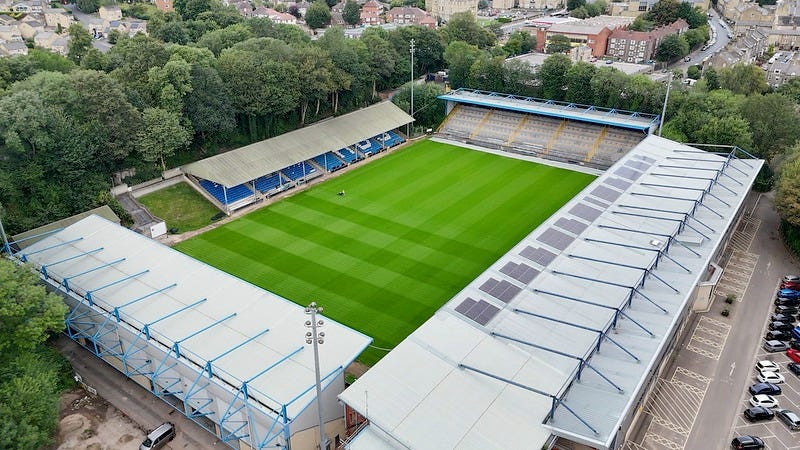
Yet, in 2024, Calderdale Council set in motion a process that would threaten this century-long legacy. Citing unsustainable financial pressures, the Labour-run cabinet announced its intention to dispose of the stadium, a decision that has since spiralled into a full-blown crisis of governance. The proposed sale of this cherished public asset to a private businessman, Huddersfield Giants owner Ken Davy, for what is understood to be a nominal sum, has ignited a firestorm of controversy.
An investigation into the council’s handling of the disposal reveals a process marred by profound and systemic failures. It is a story of persistent secrecy, built upon a flimsy financial case riddled with inconsistencies and omissions. It is a story of a public consultation process so flawed it has been labelled a “sham,” where the overwhelming opposition of residents was dismissed in an act of political theatre. And it is a story of potential illegality, where the council appears to be ignoring its stringent statutory duties, flouting basic principles of public law, and proceeding down a path that could be challenged in the courts.
This is not simply a debate about a sports ground. It is a flashpoint in a wider battle over the stewardship of public assets and the very nature of local democracy. Calderdale Council’s handling of The Shay stands as a textbook example of procedural mismanagement, a worrying lack of transparency, and a troublingly casual attitude toward public funds that has left the community exposed, eroded public trust, and raised grave doubts about whether the process has been conducted in the best interests of the people it is meant to serve.
Part 1: A Deal Forged in Secrecy
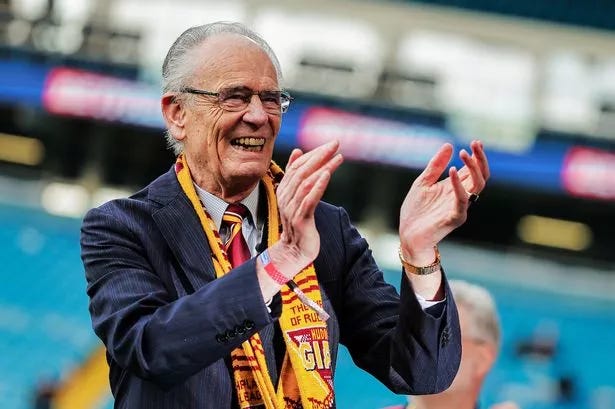
The controversy began in earnest on March 17, 2025, when Calderdale Council’s Cabinet made its decision: it would proceed with a disposal plan for The Shay submitted by Ken Davy. Mr Davy, the millionaire owner of the Huddersfield Giants rugby league club, had long been seeking a new home for his team, and The Shay presented a convenient, if temporary, solution while he pursued ambitions for a new, purpose-built stadium in neighbouring Kirklees. The council, for its part, framed the decision as a pragmatic necessity. Cabinet member for Resources, Councillor Silvia Dacre, insisted the deal would safeguard sports provision and provide financial stability, arguing that The Shay represented a “significant liability” whose costs outweighed its commercial value.
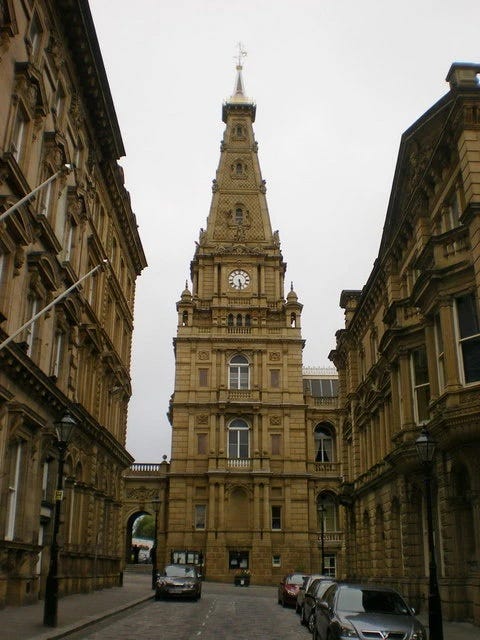
From the outset, however, the process was shrouded in a veil of secrecy that bred deep suspicion among residents and campaigners. The council’s central claim—that the sale represented “value for money”—was asserted without evidence. The one document that could have substantiated this, the formal Value for Money (VfM) appraisal, was withheld from the public, if it even exists. So too was the independent ‘Red Book’ valuation that the council claimed supported its argument that the asset had “little or no value”. The details of Mr Davy’s proposal and a competing community-led bid, known as SST2.0, were also kept under wraps. Without these crucial documents, taxpayers were rendered incapable of scrutinising the accuracy of the council’s financial assertions or understanding the methodology by which the stadium’s supposed value had been calculated.
This refusal to engage transparently became a defining feature of the council’s strategy. At a cabinet meeting on September 1, a resident submitted a written question challenging the “value for money” claim, highlighting the stadium’s significant income streams—£240,000 annually in rent—and the £800,000 recently invested in its pitch. In her written reply, Cllr Dacre repeated the mantra that the stadium’s liabilities outweighed its value but crucially, did not release the VfM appraisal or provide any comparative analysis of the alternative community proposal.
When the resident followed up with a direct email requesting the full appraisal, including its methodology, assumptions, and scoring criteria, the response was not just a refusal, but a procedural shutdown. Cllr Dacre’s reply was terse: “I am advised there is no right to a follow up and I will not be responding to your supplementary question”. When pressed again, she doubled down, forcing the resident into the slow, formal Freedom of Information (FOI) process—a move described by critics as a cowardly attempt to avoid scrutiny and slow down public debate ahead of key decisions. Instead of confronting questions head-on, the cabinet member chose to hide behind procedure, undermining both transparency and public confidence. For many, the council’s refusal to produce the appraisal wasn’t a suggestion of weakness; it was a confession that their ‘value for money’ argument was a sham.

This pattern of secrecy escalated into a formal legal challenge. A freedom of information campaigner, determined to pierce the council’s wall of silence, requested all documents related to the competing bids and the cabinet’s decision-making process. The council refused, invoking two specific exemptions under the FOI Act: Section 36 (Prejudice to the effective conduct of public affairs) and Section 43 (Commercial interests). The council argued that releasing the information would have a “chilling effect” on the candour of internal debate and would prejudice its commercial interests.
The campaigner’s detailed rebuttal, threatening escalation to the Information Commissioner’s Office (ICO), systematically dismantled the council’s justifications. It argued that the Section 36 exemption is “notoriously weak” once a final decision has been made, as the public interest in understanding how that decision was reached massively increases. The commercial interests argument was labelled “not persuasive,” consisting of “broad, speculative assertions” that failed to outweigh the significant public interest in accountability for the disposal of a major community asset. The letter pointed out a critical flaw in the council’s logic: the council itself had admitted the information would “in due course” be made public. If disclosure was inevitable, withholding it now “simply delays public scrutiny until after decisions are locked in, which defeats the purpose of the FOI Act”.
Perhaps the most startling allegation to emerge from this battle for transparency concerned the council’s governance and record-keeping. In response to the FOI request, the council claimed that no internal correspondence whatsoever—no emails, no meeting notes, no memos—existed in relation to the competing SST2.0 community proposal. The campaigner found this claim “wholly implausible”. “Given the scale and significance of the matter — a multi-million-pound public asset and a Cabinet-level decision — ... I find it wholly implausible that no internal emails, meeting notes, or communications exist,” the letter stated forcefully. This assertion suggested two deeply troubling possibilities: either the council’s search for documents was inadequate, or there had been a “failure to record decision-making in a manner consistent with transparency and good governance”. The implication that a decision of this magnitude was made without a proper paper trail pointed to a significant failure of public administration. The dispute was no longer just about a stadium; it was about the fundamental principles of accountable government.
Part 2: A Foundation of Sand: Unpicking the Financial Case
The entire justification for selling The Shay rests on a single, powerful claim articulated in the council's own disposal report: “The Council has an interest in the Shay Stadium that at best has little or no value…In fact the stadium represents a net liability”. By framing the stadium as a financial albatross, a persistent drain on strained resources, the council constructed the rationale necessary to justify a disposal for a nominal sum, portraying it not as a loss, but as the prudent offloading of a burdensome cost centre. A headline figure of £161,000 in annual savings was repeatedly cited to cement this narrative in the public mind.
However, under scrutiny from campaigners and through disclosures from FOI requests, this financial foundation has crumbled, revealing a case built on questionable accounting, significant omissions, and alarming inconsistencies. The financial data presented to the public appears to have been, at best, poorly assembled and, at worst, deliberately manipulated to justify a predetermined outcome.
One of the most glaring flaws concerns the inclusion of business rates in the stadium’s operating costs. The council’s calculations appear to have been inflated by approximately £35,000 per year for business rates. Yet, as a local authority, Calderdale Council is generally exempt from paying these on properties it owns and uses for public purposes. Since The Shay is used for such purposes, and the clubs operate under licences rather than formal leases, there is strong reason to doubt that any business rates are being paid at all. This single discrepancy raises the possibility that the financial case presented to the public was inaccurate and overstated from the start.
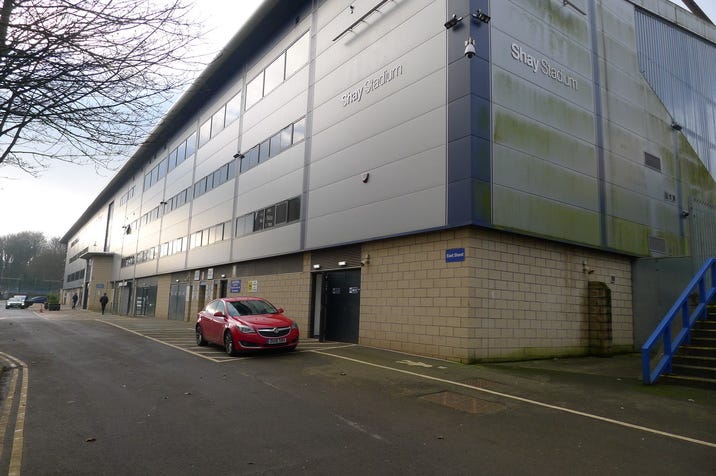
Equally troubling is the council’s failure to account for its own use of the stadium. The council’s Children and Young People and Adults departments occupy 608 square metres of office space within the East Stand, a fact noted in a resident's question to the cabinet which valued this use at a notional £170,000 per year. After a sale, this would become a real cost, with the rental value estimated at approximately £107,000 annually based on local market rates. Yet this significant future liability does not appear to have been factored into the council’s disposal rationale. Furthermore, there is no evidence that the council has been appropriately cross-charging its own departments for their share of utilities and running costs. An FOI response conceded that if council services were held accountable for 80% of the overall energy usage, it would reduce the stadium’s reported energy costs by around £93,500 per year. This accounting practice has the effect of distorting the stadium’s reported financial position by attributing council overheads to the stadium itself, thereby inflating its apparent operating loss.
The council’s financial model is further undermined by what it omits. In the summer, a new hybrid pitch was installed, funded jointly by the clubs, the council, and a £400,000 grant from the Football Foundation. This significant capital improvement is expected to substantially reduce ongoing maintenance costs. Yet this anticipated saving was not reflected in the council’s budget forecasts or cited as a long-term benefit of retaining ownership, a convenient exclusion that further bolstered the "net liability" narrative. The rationale also downplayed the stadium's diverse income streams, which include not just the clubs but also tenants like a car dealership and a commercial car wash. Most importantly, it completely ignored the broader economic role the stadium plays in Halifax. As local businesses and campaigners pointed out, matchdays generate significant footfall for pubs, restaurants, and taxi services, creating a powerful ripple effect throughout the local economy that was absent from any cost-benefit analysis.

Perhaps the most alarming discovery, however, was the evidence of historic inconsistencies in the council's own financial reporting. A review of multiple FOI responses revealed substantial discrepancies. For instance, an FOI response from December 2022 listed the stadium’s income for the 2019–20 financial year as £260,103. But in a later update dated May 29, 2025, that same figure was revised down to £192,543—a reduction of over 26%. Such a drastic revision, offered without explanation, suggests either a profound lack of accounting rigour or, more concerningly, deliberate data manipulation to strengthen the case for disposal. This single inconsistency casts serious doubt on the credibility of all the council’s figures, including the claimed £161,000 annual saving. Later in the process, this savings figure inexplicably jumped to £500,000, further confusing the issue and reinforcing the suspicion that the numbers were being fudged to suit a particular narrative.
This pattern of flawed and inconsistent financial reporting created an environment where no informed decision could be made. Community groups and the clubs themselves, who were initially invited to explore alternative ownership models, were presented with financial information that made it impossible to conduct a sensible appraisal or put forward a viable plan. The picture that emerges is one that may meet the threshold for maladministration—a failure by a public body to act lawfully, transparently, or in the public interest through misleading financial reporting and the poor stewardship of public assets.
Part 3: The Illusion of Democracy: A Consultation in Contempt
Central to any legitimate democratic process involving the disposal of a major community asset is a fair, transparent, and meaningful public consultation. On this count, Calderdale Council’s performance was not merely flawed; it was a masterclass in political theatre designed to deflect scrutiny and justify a predetermined outcome. The entire exercise appears to have been conducted in contempt of the public it was supposed to engage, culminating in the astonishing admission that the fate of The Shay “will not be a matter of public debate”.
The process was compromised from the very beginning. The initial budget consultation in 2024 was framed in a vague and misleading way. It stated that the council proposed to “transfer a long leasehold interest of the stadium” and listed three potential options: transfer to a single club, transfer to a joint company run by both clubs, or, as a final resort, disposal on the open market. Residents were then asked a single, blanket question: whether they supported or opposed “the proposal”. This ambiguous framing made it impossible to gauge public opinion on the specific and highly controversial option of an open-market sale to a private entity. At the time, Cabinet member Councillor Jenny Lynn explicitly reinforced the idea that a sale was not the goal. “This is not about making a quick buck to sell the Shay,” she said, adding that the stadium “had not had a value put on it as a sale was not the purpose”. The public was led to believe any disposal would remain within the sporting community.

The council used the results of this flawed survey to claim a public mandate, publishing a headline figure of 56% support for disposal versus 34% opposition. At face value, this looked like a green light. But an analysis of 169 written comments obtained through an FOI request revealed a dramatically different reality. Approximately 85 to 90 per cent of respondents who provided detailed feedback opposed the sale outright. The Shay emerged as one of the most commented-on issues in the entire consultation, signalling its deep significance to the community.
The public’s written responses painted a vivid picture of what was at stake. Respondents stressed the Shay’s value as an essential part of Halifax’s identity and heritage, with one resident describing it as “part of Halifax’s soul”. Around 55 per cent of comments voiced fears that a private sale would put the future of FC Halifax Town and Halifax Panthers at serious risk. Many criticised the proposal as “short-term thinking” that would cause long-term damage to the town’s wellbeing. Underlying these concerns was a profound tone of mistrust, with contributors accusing the council of having a “hidden agenda” or conducting a “backroom deal,” using words like “short-sighted” and “disgraceful” to describe the plan. Even the tiny minority who supported disposal did so only with strict conditions, demanding legally binding covenants to guarantee continued sporting use and protect the resident clubs. Just four individuals—less than 3% of written respondents—supported an unrestricted sale.
Despite this overwhelming opposition, the council pressed ahead. The depth of public concern led to a hastily arranged ‘drop-in’ session organised by local ward councillors in March 2025. However, by the time it took place, the official report recommending the sale to Ken Davy had already been published, rendering the event powerless to influence the outcome. A subsequent report on the session, authored by the council’s own Labour councillors, was a damning indictment of their own cabinet’s process. It stated bluntly: “The lack of public involvement has caused needless distrust among residents and a perception that this is a ‘done deal’”.
The final, unequivocal proof of the consultation’s cynical nature came in an email from senior officer Ian Day, with Council Leader Jane Scullion copied in. In response to a query about the stadium's future, he wrote: “The details of the arrangements will be progressed in line with the Cabinet resolution and will not be a matter of public debate”. This single, cold, bureaucratic sentence ripped away any remaining pretence of democratic engagement. It confirmed the worst fears of campaigners: the consultation had been nothing more than political theatre, a box-ticking exercise designed to be ignored.

This conduct flies in the face of established public law principles, which require that consultations be fair, provide clear information, and genuinely consider feedback at a formative stage. Using a flawed process to justify a predetermined outcome can render a decision unlawful. By misleading the public and then explicitly stating their voices would no longer be heard, Calderdale Council not only undermined faith in local democracy but also left itself dangerously exposed to a legal challenge.
Part 4: A Legal Minefield: Breaching Duties and Ignoring Rules
Local authorities in the United Kingdom are not private landlords; they hold public land in trust for their communities, bound by statutory duties to act with prudence and in the public interest. In its rush to dispose of The Shay, Calderdale Council appears to have navigated into a legal minefield, with its actions raising serious questions about compliance with at least three critical pieces of legislation: the Local Government Act 1972, the Localism Act 2011, and the Equality Act 2010.
The cornerstone of this legal framework is Section 123 of the Local Government Act 1972. This law sets out a non-negotiable rule: when selling land, a council must obtain the “best consideration that can reasonably be obtained”. This principle exists precisely to protect the public purse and prevent valuable community assets from being sold off cheaply without due cause. While the law does allow for a sale at less than market value under the General Disposal Consent (England) 2003, it imposes two stringent, concurrent conditions. First, the undervalue—the difference between the market price and the sale price—must not exceed £2 million. Second, the disposal must be demonstrably likely to contribute to the promotion or improvement of the economic, social, or environmental well-being of the area.
The Shay proposal appears to fail both tests spectacularly. It is almost inconceivable that the unencumbered freehold of Calderdale’s only major stadium, occupying a prime site in Halifax, is worth so little that a sale for a nominal sum would result in an undervalue of less than £2 million. Any realistic valuation would almost certainly place the undervalue far above this statutory ceiling, meaning the council cannot rely on the General Disposal Consent and would require explicit, case-by-case approval from the Secretary of State—a step it has not taken. To proceed without this would be to act unlawfully.
Even if, hypothetically, the undervalue fell below the £2 million threshold, the proposal would collapse against the second, insurmountable hurdle: the well-being test. This power was designed to facilitate genuine public benefits, like transferring land to a community trust to guarantee affordable sports facilities for children. It was never intended as a mechanism to transfer multi-million-pound public assets to private individuals with no legally binding obligations to the community. An analysis shows the Shay deal does not promote well-being; it actively undermines it:
Social Well-being: The sale poses a direct threat to FC Halifax Town and Halifax Panthers, pillars of Calderdale’s social fabric. Placing their home in the hands of a commercial owner introduces a potential fatal level of instability, with the spectre of future rent hikes or even eviction jeopardising their very existence. This is a profound and irreversible erosion of well-being.
Economic Well-being: The economic vitality of Halifax is intrinsically linked to The Shay. The match-day revenues that support countless local pubs, cafes, and restaurants would diminish or disappear if the clubs were destabilised. This represents economic damage, not improvement.
Democratic Well-being: The residents of Calderdale are investors in The Shay, having funded its redevelopment with millions of pounds of public money. To sell the freehold is to permanently relinquish public stewardship and democratic control, representing a betrayal of the public's investment and trust.
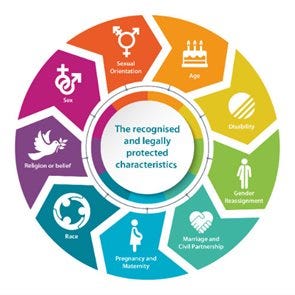
The council’s failure to complete a proper Equality and Community Impact Assessment (ECIA) in a timely manner creates further legal peril. The Equality Act 2010 requires public bodies to give "due regard" to how decisions impact individuals with protected characteristics. A private sale of a major community asset could disproportionately harm low-income groups, disabled residents, and youth teams by limiting access or increasing fees. Publishing an incomplete assessment nearly a year after the public consultation had already taken place suggests this duty was not properly fulfilled, potentially rendering the decision legally defective and open to judicial review.
Finally, the council’s handling of the stadium’s status as an Asset of Community Value (ACV) under the Localism Act 2011 highlights the intense legal scrutiny it is now under. The ACV listing triggered a formal six-month moratorium, pausing the sale to give a community group the chance to prepare a bid. Even after this group withdrew its interest, the council confirmed it would wait until the full moratorium period expired on October 3 before proceeding. This decision to adhere rigidly to the timeline, rather than accelerating the sale, suggests a newfound legal caution. With campaigners and legal observers raising concerns and the threat of a judicial review looming, the council appears to recognise that ignoring or short-circuiting these procedures could open the door to a court challenge it cannot afford to lose.
Part 5: A Crisis of Governance: Inertia, Conflicts, and Deception
Beyond the flawed financials and questionable legality, the saga of The Shay has exposed a deep-seated crisis of governance within Calderdale Council. The disposal is not an isolated error in judgment but the culmination of years of inertia, a culture of secrecy, a shocking conflict of interest in its complaints process, and a disturbing willingness to engage in cynical branding to mask a private takeover.
The roots of the current crisis can be traced back to April 2019, when the council’s own Place Scrutiny Board received a report with a clear recommendation: develop parts of The Shay estate to secure the stadium’s long-term financial sustainability. The board agreed, and an update was promised within a year. That update never came. For four years, this proactive strategy was quietly shelved, a period of inaction the council later blamed on the Covid pandemic. This excuse fails to hold water; across the country, other councils managed to push forward with regeneration projects during this time. In Calderdale, there was only silence. This was not unavoidable delay; it was a choice to pursue drift over direction. This prolonged inertia allowed the stadium’s potential to wither, creating the very conditions of financial dependency and vulnerability that are now being used to justify its disposal. The council had a blueprint for investment and sustainability in its hands; instead, it chose neglect.
This failure of strategic oversight was compounded by a startling breakdown in procedural fairness. After a formal complaint was submitted about the handling of the disposal, the council appointed an officer to investigate: Sarah Richardson, Assistant Director of Customer Services. This appointment was deeply alarming. Ms Richardson was not an impartial bystander; she was the very officer with day-to-day responsibility for The Shay and, crucially, the author of two of the most significant documents underpinning the sale—the incomplete Equality Impact Assessment and the Disposal Report that recommended proceeding with Ken Davy’s proposal. In effect, the council tasked an officer with marking her own homework, a clear conflict of interest that violates the most basic principles of fair and transparent complaints handling.
Perhaps the most cynical element of the council’s approach has been its complicity in a deceptive branding exercise. On August 7, 2025, a new company was quietly incorporated: Calderdale Community Stadium Limited. The name sounds hopeful, implying public or cooperative ownership. The truth, however, is stark. Every share is owned not by the community, but by three trustees of a private family trust—the Jennifer Davy Discretionary Settlement 1997. The company is designed from the ground up to lock power in the hands of a small, unelected circle, with articles of association that prevent any outsider from ever getting a foot in the door.
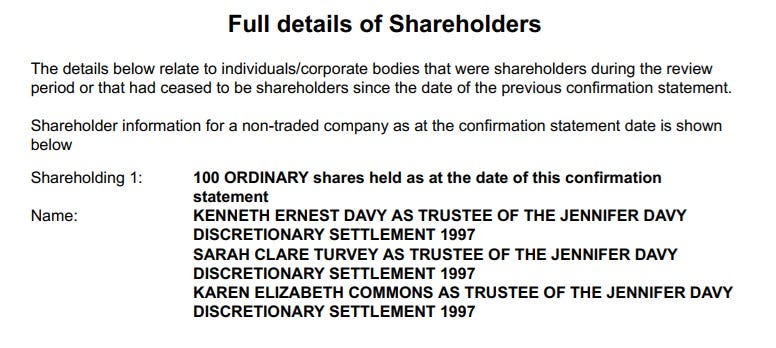
This is not community ownership; it is, as critics have described it, "control by dynasty, not democracy". The "community" label is a deception, a cynical piece of PR gloss designed to soften outrage while a valued public asset is consolidated into private hands. Calling this venture a “community stadium” is not just misleading; it exploits local pride and suggests a shared benefit that is legally impossible under its corporate structure. The council has pointed to restrictive covenants as a safeguard, but these are paper shields, only as strong as the council’s appetite for costly and protracted court battles to enforce them.
Underpinning all of this has been a profound absence of democratic oversight. The monumental decision to dispose of Halifax’s most iconic sporting asset was never “called in” for proper scrutiny by councillors. The burden of holding the cabinet to account has fallen not on the elected officials paid to do so, but on residents, campaigners, and the arduous Freedom of Information process. This represents either staggering complacency or deliberate complicity from the wider council, and a damning indictment of the health of local democracy in Calderdale.
Part 6: The Beneficiary: Ken Davy’s Strategic Masterstroke
While Calderdale Council has been mired in procedural chaos and public backlash, one figure has remained positioned to emerge from the controversy with a significant commercial victory: Ken Davy. While no one can fault a businessman for spotting an opportunity, an examination of his broader strategic interests reveals that the acquisition of The Shay for a nominal fee is far more than a simple property deal. It is a shrewd and opportunistic play that leverages public assets to advance a private agenda, with Calderdale taxpayers poised to foot the bill and bear the risk.
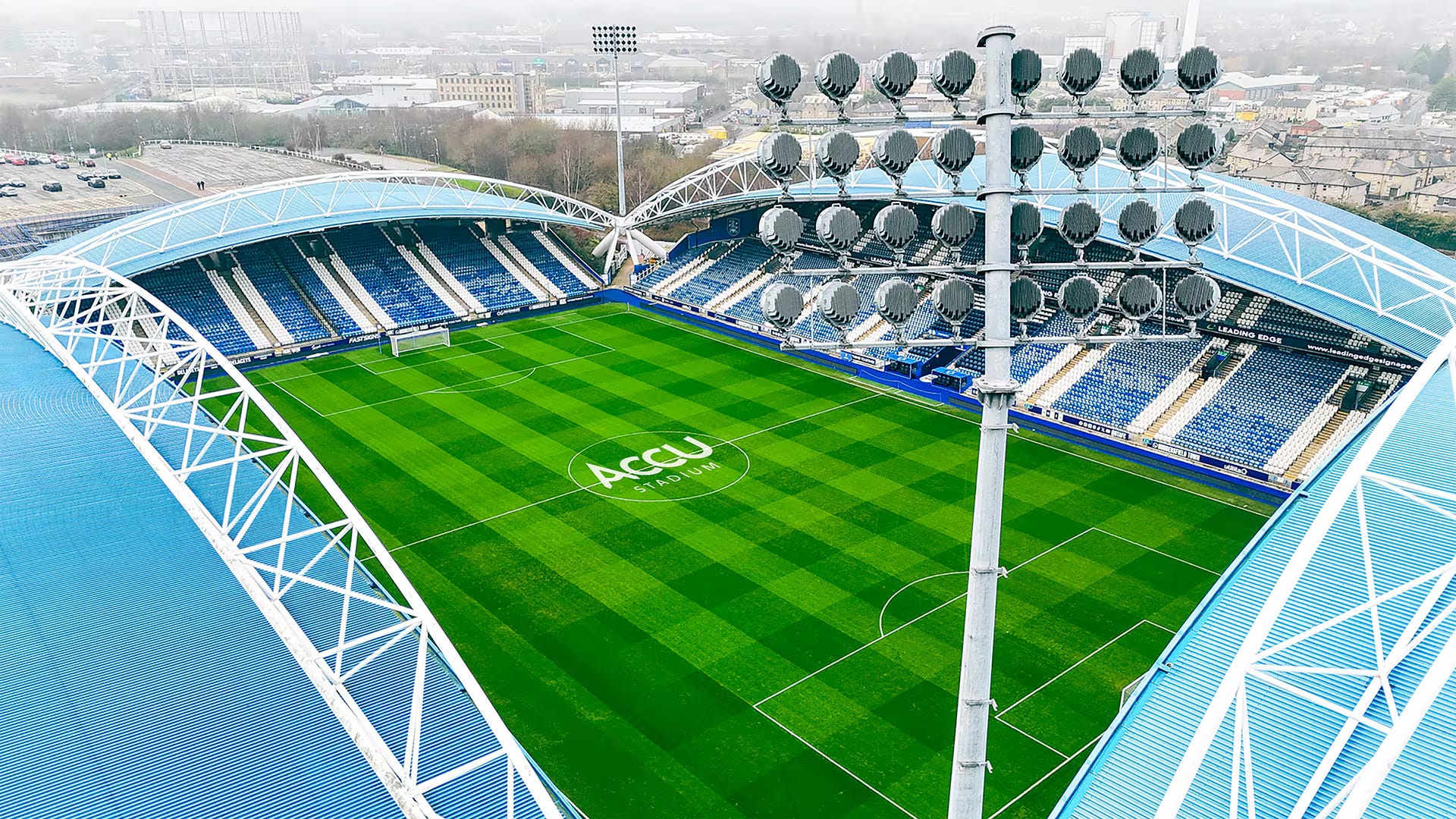
Mr Davy’s interest in The Shay cannot be understood without looking at the parallel situation in Kirklees, where his Huddersfield Giants are tenants at the Accu Stadium. For years, Davy has been pushing to relocate his club to a new, purpose-built stadium on a derelict plot of land in Huddersfield. His ambitions have clashed with Kirklees Council's own regeneration plans for the site. The situation is complicated by the ownership structure of the current stadium company, KSDL, in which Davy’s club holds a 20% stake alongside Huddersfield Town (40%) and Kirklees Council (40%). A deal was drafted to transfer the council's shares to the football club, but Davy has reportedly refused to sign it off, linking his approval to securing a new home for the Giants. For some observers, this looks less like negotiation and more like brinkmanship.
Viewed in this context, the move to acquire The Shay appears to be a masterful strategic ploy. It provides Davy with a crucial fallback option and immense leverage in his negotiations with Kirklees Council. If he cannot get the deal he wants in Huddersfield, he has a ready-made home for his team in Halifax. This raises uncomfortable questions for fans and stakeholders in both towns. Is this a genuine long-term plan for Halifax, or is The Shay simply a pawn in a much larger game? If Davy were to succeed in building his dream stadium back in Huddersfield, what would become of The Shay? He would be left holding a valuable asset, acquired for next to nothing, which he could then sell at a massive profit, with no binding long-term obligations to the Calderdale community.
The financial disparity of the deal is stark. While KSDL, the Kirklees stadium company, has net assets of approximately £8.57 million, Davy's 20% stake would be worth roughly £1.7 million on a pro rata basis. He stands to trade this stake for a substantial payout while simultaneously acquiring The Shay—a comparable asset with existing tenants and revenue streams—for a nominal sum. It is an incredibly astute commercial move that allows him to cut his club’s outgoings, secure new assets, and boost his club's all-important IMG score, which values infrastructure stability.
Perhaps the most galling aspect of the deal is how public and club funds have been used to facilitate it. To accommodate the Huddersfield Giants, significant work was required on The Shay's pitch. This new hybrid surface, essential for the sale to proceed, was not paid for by Mr Davy or his club. Instead, the cost was borne by the existing tenants, FC Halifax Town and Halifax Panthers, alongside Calderdale Council and a £400,000 grant from the Football Foundation. The Football Foundation, a body dedicated to supporting football, is now formally investigating whether its grant has been improperly used to enhance an asset on the verge of being transferred into private rugby ownership, a situation that risks setting a troubling precedent. In essence, public money and funds from Halifax's own clubs have been used to upgrade a stadium to meet the needs of its incoming private owner, who contributed nothing to the investment.

This is bigger than any one deal. It raises fundamental questions of values: should public assets be protected for the long-term benefit of the community, or should they be sold off cheaply to patch over short-term financial shortfalls, enriching private individuals in the process? Ken Davy is simply acting as any sharp businessman would. The failure lies with Calderdale Council, which appears to be on the verge of trading away its future to fix today's problems, handing over a community crown jewel on the flimsiest of pretexts.
Conclusion: A Betrayal of Trust
The proposed disposal of The Shay stadium is a story of democratic and procedural failure on an epic scale. It is a case study in how not to manage public assets. Calderdale Council’s decision was not, as it claims, a prudent financial move born of necessity, but a catastrophic failure of governance built upon a foundation of secrecy, misleading financial data, and a contemptuous disregard for public opinion.
The investigation has revealed a financial case for the sale that is not just weak, but riddled with holes, questionable assumptions, and startling inconsistencies that render it wholly unreliable. The public consultation was a cynical exercise in political theatre, a “sham” process where the overwhelming voice of the community was deliberately ignored in favour of a predetermined outcome. The entire process has been conducted under a veil of unlawful secrecy, with the council refusing to release the key documents that might justify its actions, forcing residents into protracted FOI battles to uncover the truth.
Legally, the council is treading on dangerously thin ice. Its proposal appears to fail the stringent tests required to sell a public asset at an undervalue, placing it at risk of acting beyond its legal powers. Its failure to conduct a timely and thorough equality impact assessment adds further legal peril. These are not minor procedural errors; they are fundamental breaches of the duties of transparency, prudence, and accountability that councils owe to the public they serve.
This saga is a betrayal. It is a betrayal of the generations of taxpayers who funded the stadium, a betrayal of the thousands of fans whose identity is intertwined with the ground, and a betrayal of the public trust vested in elected officials to be responsible stewards of community assets. The council’s inertia allowed a valuable asset’s potential to wither, creating the very crisis it now uses to justify a fire-sale to a private businessman whose primary interests lie elsewhere.

Rather than improving the lives of Calderdale residents, this sale threatens to destabilise their beloved sports clubs, permanently strip them of control over a key civic landmark, and risk tangible economic harm, all while offering no enforceable community gain in return. Calderdale Council has traded a century of public ownership and civic pride for the illusion of fiscal expediency. This is not leadership; it is a disappearing act. The debate over The Shay may have been declared over by the council, but for those who care about democracy, accountability, and community, it is only just beginning. The stadium’s future hangs in the balance, but the damage to public trust has already been done.